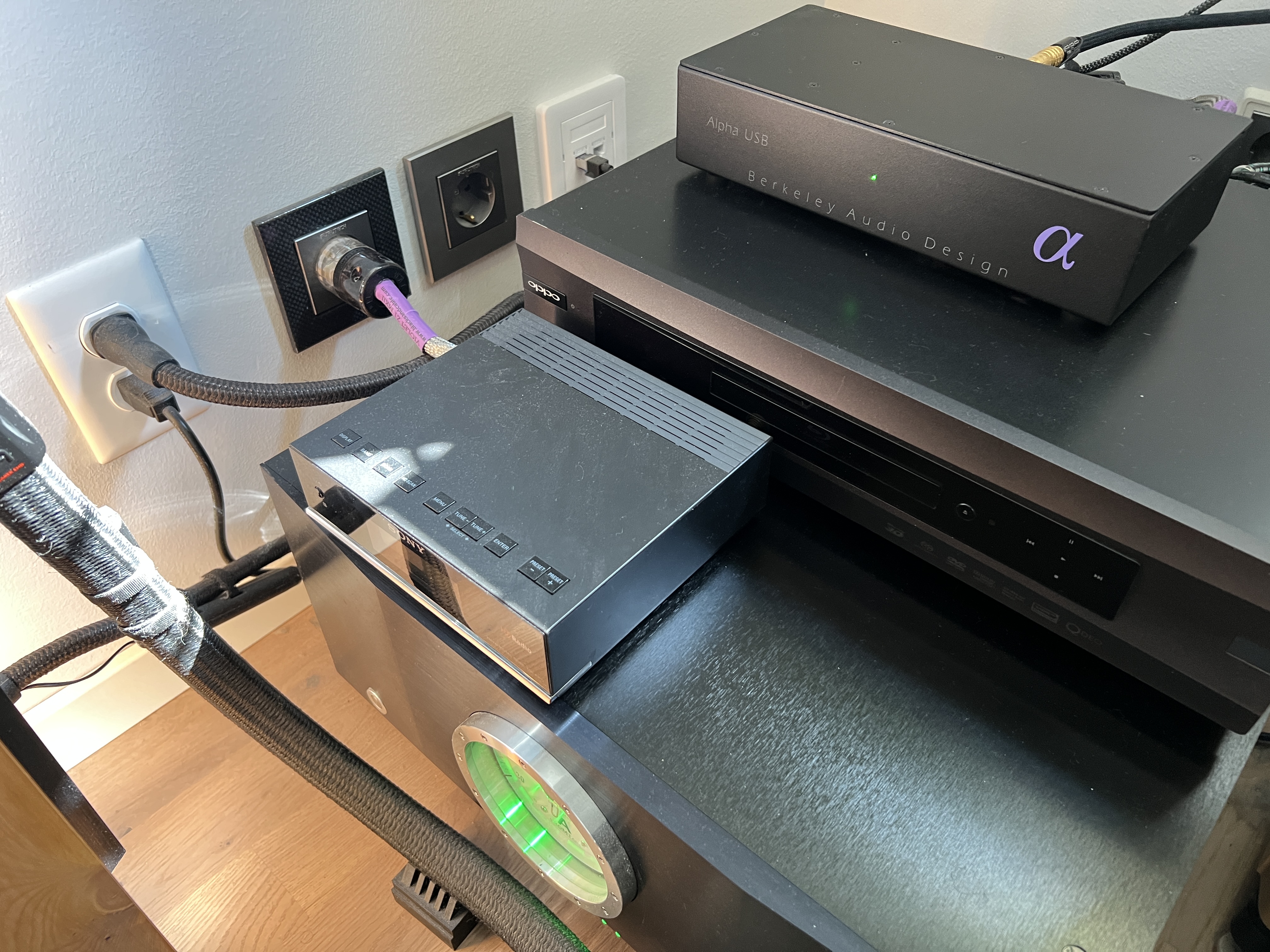
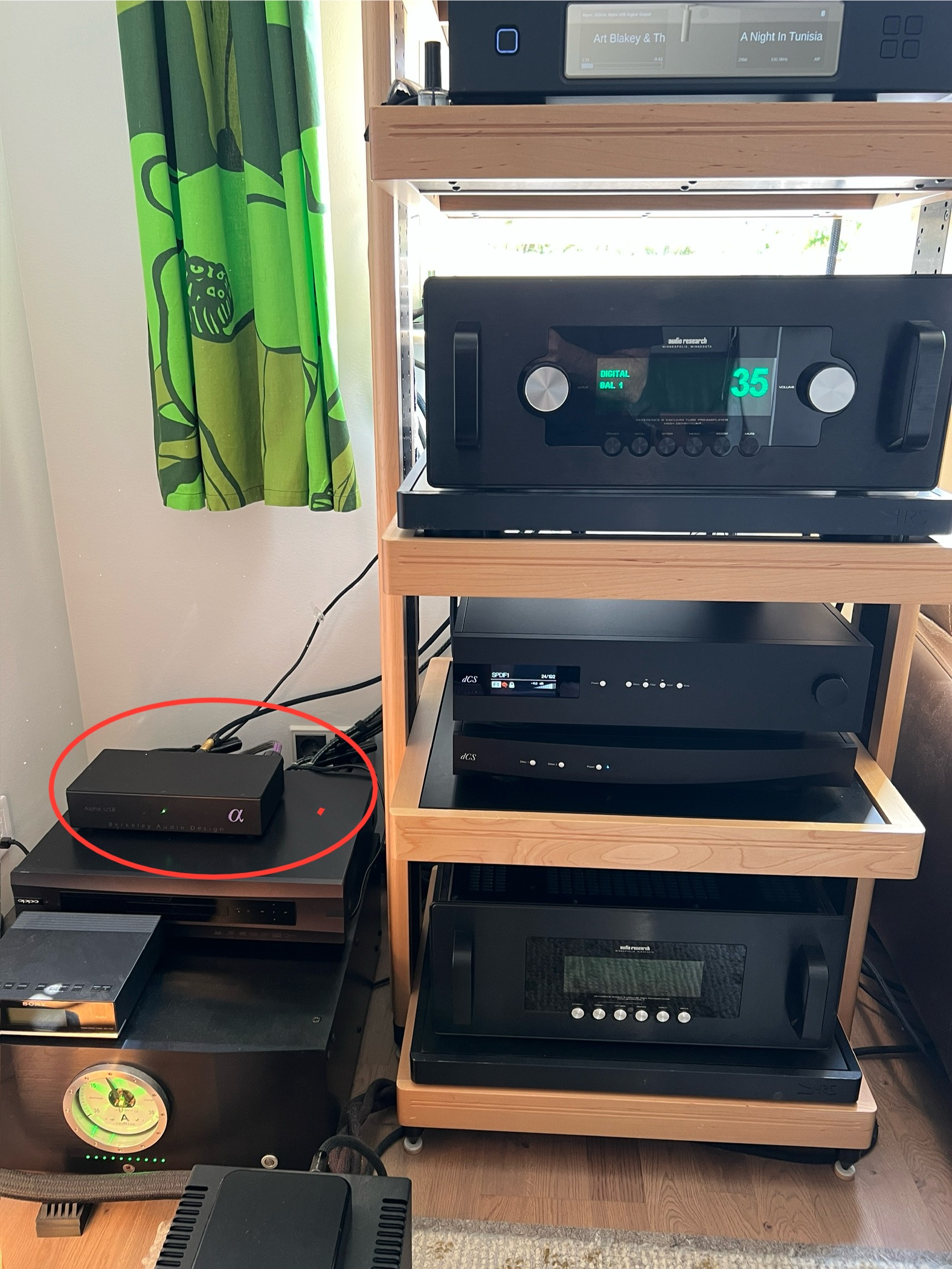
I am trying a Berkeley Alpha USB 2 with my Bartok DAC & Rossini Clock.
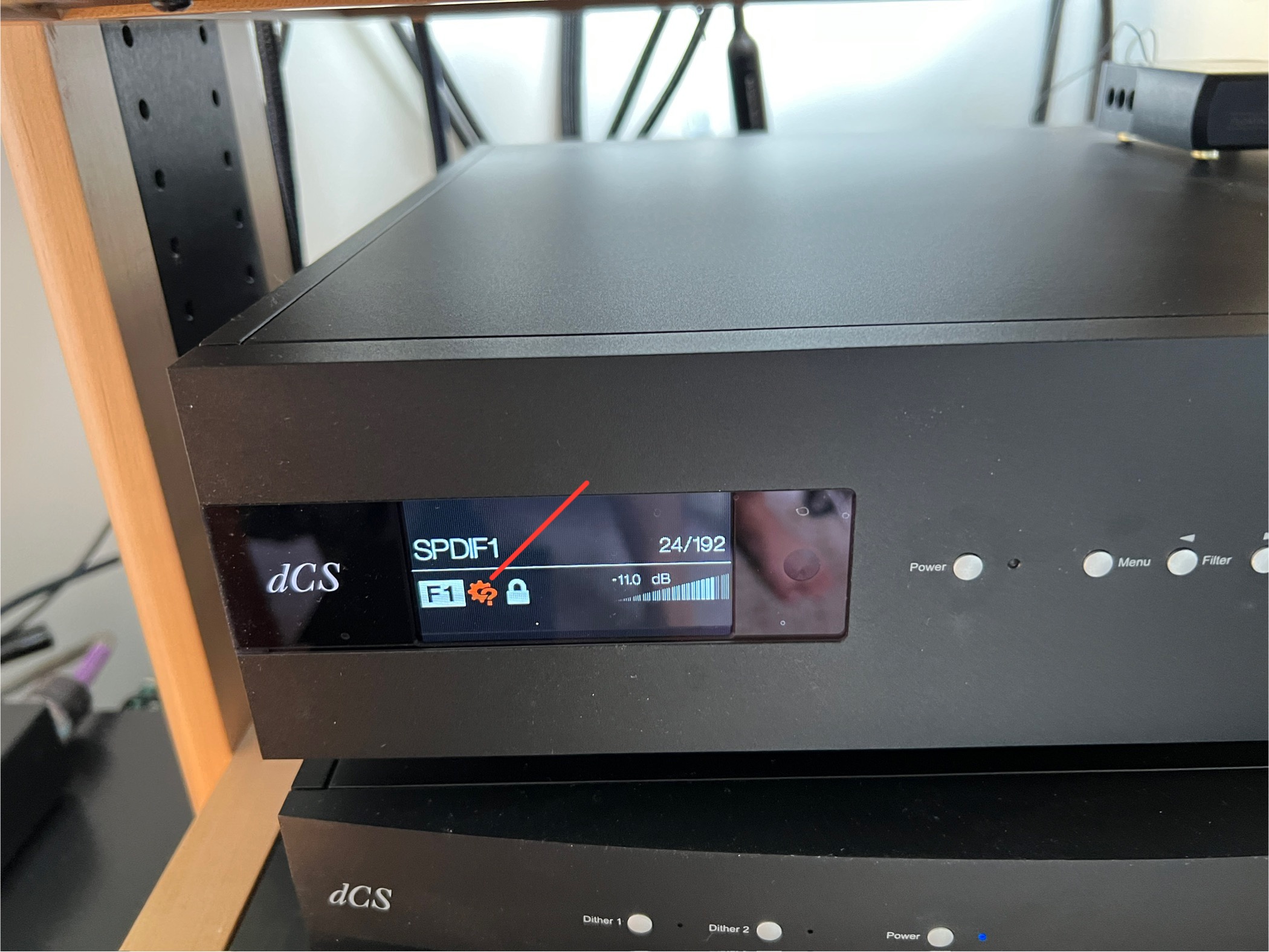
I keep getting the red clock error using the alpha USB.
Setup is Aurender N10 → AQ diamond USB-> Berkeley Alpha USB → Tara Labs SPDIF → SPDIF1 on Bartok.
Rossini clock w Nordost Valhala to Bartok
For those who aren’t aware, the Alpha USB helps remove noise inherent in USB signals, even the best implementations. My understanding is it does also re-lock the signal before sending it out. You can use either AES or SPIDF coaxial cable output to send to your DAC.
I would think you still could use the Rossini Clock with this set up so it just seems weird unless somehow the Bartok does not like having a SPIDIF 1 input signal alongside SPIDF clocking cables?
It’s not a crisis, of course, but a curiosity, which I’m sure has a simple answer that I am too stupid to figure out
In a synchronously connected digital chain (which includes units connected via AES or S/PDIF) there can only be one clock master. If there is more than one they will inevitably drift apart causing a click or a dropout.
Any unit in a synchronously connected digital system that can accept an external clock input can be slaved to an external Master Clock (or to the clock in the DAC).
However the Alpha USB lacks a WordClock In and can’t be slaved to any other clock, so it has to be the master in a synchronous chain. In other words the Bartók must slave its clock to the Alpha USB (so for the S/PDIF 1 input you need to set the Bartók to Sync Mode ‘A’ for Audio) and while connected to this synchronous input your Rossini Master Clock is not used. Same is also true if you connect your N10 directly to the Bartók via AES or S/PDIF as that also lacks a WordClock In.
When using asynchronous inputs like USB or ethernet, there is no synchronization dependency and the Bartók can be slaved to your Rossini Master Clock to reduce jitter.
When I originally discussed the utility of having the clock with DCS I. The community, DCS said it serves as a master block reference for the DAC and not so much taking over inscribing the bits of data. If it functions as a reference clock, that the internal Bartok can use it to be certain it doesn’t drift and can correct it from the. Ore accurate clock in the Rossini Master clock (pardon my paraphrasing).
So, I understand you correctly, there does not seem to be a good purpose, in my setup, of having the Rossini clock if:
I use AES digital cable from the N10 to Bartok
I use USB from N10 to the Berkeley and the SPIDF back to Bartok
Since I rarely use USB (mostly network and AES from Aurender), I have a bit of buyers remorse.
Is it helpful over Network or using Roon/Tidal Connect/Qobuz Connect?
I’m really sorry if you got misleading information here on the forum. The subject of clocking gets a bit knotty as soon as you start introducing third party products, which although they will all work with dCS DACs aren’t necessarily able to take advantage of their highest quality clocking regimes. That means it is really difficult to be both clear (simple) and comprehensive (correct). A glib post risks oversimplifying things and a long one risks becoming too confusing.
That said if there are any particular posts here on the forum that misled you please DM me a link and I will check for any incorrect information lurking here and correct it.
Both your statements above are correct. Both the N10 and Berkeley USB lack clock inputs and so can only be a master in a synchronous chain. In that case the master clock signal flows downstream through the chain embedded in the audio itself. With Wordclock inputs and separate 75Ω clock lines the clock can be sent from any master to any number of slaves.
However USB and all network-based inputs (including all those you mention) are asynchronous so when using those your Bartók can be slaved to your Rossini Master Clock as intended.
FWIW there are very few 3rd party products that offer both synchronous outputs and dCS-compatible word clock inputs. The Aurender N20, W20SE, N30/N30SA are the ones that spring to mind.