I note that–as far as I can tell from the picture–the Varèse Master Clock does not have a 10MHz reference clock input. Therefore–again, provided I am not mistaken–the Vivaldi Master Clock is the only product in the lineup that has this input.
I am therefore wondering if @James or @AndrewS can clarify dCS’s position on the addition of a high accuracy reference clock (and if this position has changed since the Vivaldi was introduced).
(I am aware from extensive reading of the prior clocking threads that lower phase noise, i.e., jitter, is much more important that long term accuracy, and therefore am not asking that.)
I don’t think our position has changed per se, but our clock architecture has. There are four master clocks in our current portfolio: Vivaldi, Rossini, Lina and Varèse. Vivaldi and Rossini share a similar architecture, as do Lina and Varèse.
As I think we’ve stated before, the 10 MHz reference clock input on the Vivaldi clock is fundamentally there for calibration. The Vivaldi Master Clock contains two VCXOs, voltage controlled crystal oscillators, and these require individual calibration for operating temperature, the calibration equipment requires that connection. The Rossini similarly has a 10 MHz input for the same purpose, it just isn’t exposed outside the chassis. As we’ve also said before the number of reference clocks with lower jitter than the Vivaldi (or Rossini for that matter) Master Clock, i.e. ones capable of improving its runtime performance, is extremely limited. It typically doesn’t include consumer audio-focused products in the low thousands of dollars price range. Low jitter is simply not a strength of the timing references (typically Rubidium or similar crystals) used in these products, which generally have excellent accuracy, stability over the longer term, which is far less important from a sound quality perspective.
With the Lina clock the team did a lot of work to develop a new architecture, one of the goals of which was to remove the need for individual calibration (and re-calibration) to streamline production and remove the need for eventual trips back to Cambridge. This was one of the things that enabled us to develop a product at a lower price point than the Rossini. People have asked why we never released a Bartók Master Clock and the reason is simple, there was simply no way we could make a product significantly cheaper than the Rossini Master Clock with the dual-VCXO architecture. So Lina uses a VCXO referenced to an OCXO (oven controlled crystal oscillator) which don’t require individual calibration as they control their own temperature envelopes. OCXOs with the low jitter that we require weren’t available when Vivaldi and Rossini were developed. With no need for individual calibration there is no need for a 10 MHz input. The Varèse Master Clock uses the same architecture, albeit in a much more elaborate and refined implementation.
Understood for a missing dedicated clock for the Bartók.
Now, I’d like to add a clock to my Bartok someday and don’t want to have to think about maintenance procedures and fees, so Lina clock seems to be the perfect choice.
BUT I’m quite reluctant to add the Lina Clock as-is, as it’s chassis format (height, width) definitely doesn’t match the Bartók…
Any plan for dCS to provide a Lina Clock in a chassis matching the Lina-X/Bartok width someday?
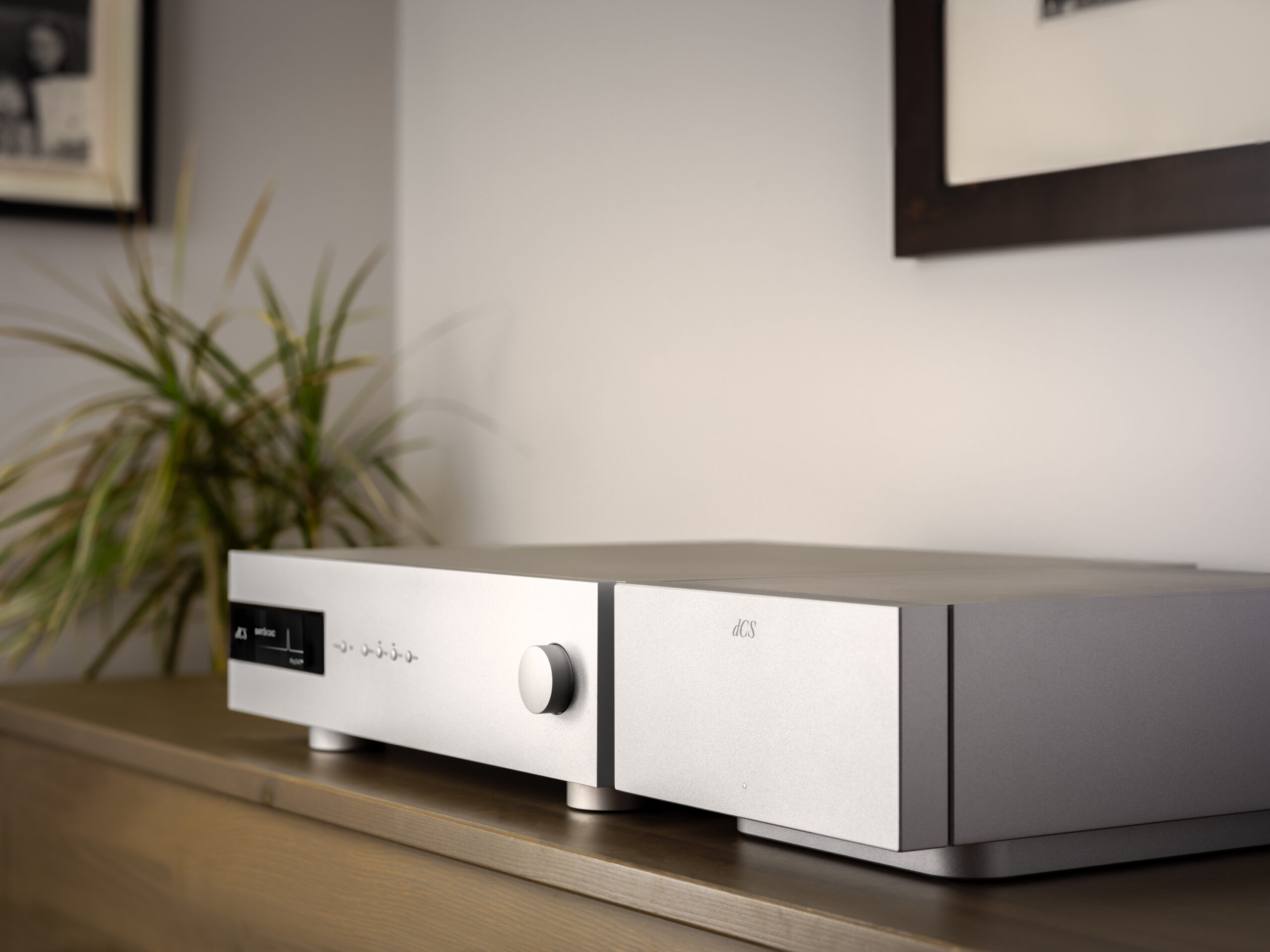
The Lina Clock does actually match the Bartók if placed beside it (I’ll see if I can find a picture). Regarding a full-width Lina clock I don’t know, but you’re not the first to ask the question.
@AndrewS, I don’t understand:
according to the specs the Lina clock is 6.5mm higher than the Bartók…
And on all the pictures I’ve seen placing the Bartók and the Lina Clock side by side, this difference in height -although small- is clearly visible.
Moreover placing the two devices side by side is not very convenient as it ends up taking 1.5 rack size in width…
Can’t see the 6.5 mm difference here, probably unscrewing Bartok’s feet can help a bit, yet the alignment isn’t absolutely perfect
Anyway, you got my point.
Thanks.
Erwan.
Decide that worrying about 1.5 mm difference in height may be thought a bit obsessive.
Ignore it.
Place the Lina clock on a 1.5 mm support like a sheet of ply.
Put the clock somewhere it is not adjacent to Bartok e.g. the shelf below.
My own concern with using Lina Clock is that a main purpose of clocking is to distribute the same clock reference to DAC and components which require to be synchronised like a silver disc spinner. Lina clock does not have sufficient ports for this. If you think that everything is available on streaming services it is not. So CD might prove a need at some point.
When Phil was still with us he wrote that most recalibration needs were caused by battery failure with Vivaldi where calibration data is held in a volatile memory. The latter is not the case with Rossini so this may not be of concern.
Hi Pete.
First it’s not 1.5, but 6.5 mm (115mm for the Bartók vs 121.5mm for the Lina boxes), and yes it matters to me.
Second, I rip all the CDs I own, so no need for extra clock outputs.
Thanks,
Erwan
To build on what Andrew has said here, OCXOs by definition cannot be referenced to anything else. They are entirely self-referential, so without doing some really questionable signal manipulation after the fact, you can’t match the speed of an OCXO to anything else - including a 10MHz reference.
That’s why the only place we use OCXOs is in Master Clocks, as they don’t need to lock to anything else. They are the Master. By contrast, everything else (DACs, Upsamplers, Transports etc.) uses VCXOs. We need to manipulate the control voltage used to adjust the absolute frequency to match a source device if no Master Clock is being used, or to lock to a Master Clock signal correctly if one is being used.
So with Varèse, where the Clock uses an OCXO for the 22MHz oscillator and a VCXO for the 24MHz oscillator, there’s no way to have a reference input as that 22MHz OCXO cannot be locked to anything.
As an aside, The inclusion of the 10MHz port on the Vivaldi Clock never was a statement that it should be used with an external reference outside of the factory. As Andrew says, it’s simply a function used during calibration that remains exposed. Pure speculation and I’m sure some folks here may remember (@AndrewS?), but I would wager that when Vivaldi was originally launched, there were very few - if any - “audiophile” 10MHz clocks on the market. The former may well have spawned the latter.
Ultimately, in the years since, nobody has broken mathematics enough to divide 10,000,000 into 44,100 or 48,000 with an integer, so our stance on 10MHz clocks is the same as it always has been.
There certainly were 10MHz reference clocks around before the Vivaldi was released (for instance the Antelope M10 which I think came out about the time I moved to Sweden, so 2006 or shortly afterwards), but I think they were mostly aimed at the professional market. I could imagine in a complex multi-unit recording or mastering environment, that long term accuracy might be more important than it is when we’re only concerned with domestic replay. Some of the more consumer-oriented units like the Mutec REF10 or the SRS PERF10 came around the same time as or shortly after the Vivaldi IIRC.
I seem to recall if the 10Mhz clock is more accurate than the Vivaldi clock, it will “most likely” yield some degree of improvement. I recall the specs of the SRS Perf 10 were mentioned in the old thread and were in fact more accurate (ppm?).