I borrowed a trade in pair of Siltech Emperor 2 speaker cables from a local dealer (RRP 20,000 euro approx ). . They are bi wired I have stenheim Alumine 3 speakers which have single binding posts . I am somewhat confused by the speaker cable markings and wonder if the community can chime in . As you can see from the photos - the 2 cables are marked differently. The first photo is showing both spade end leads are marked black at the silver sheath which suggest they should both be connected to the black speaker bind post . And so both banana end leads marked red should connect to the red speaker bind post . However this results in a very messy connection . Am I being thick ? The dealer wasn’t sure and will contact the original owner who ordered the custom built cables .
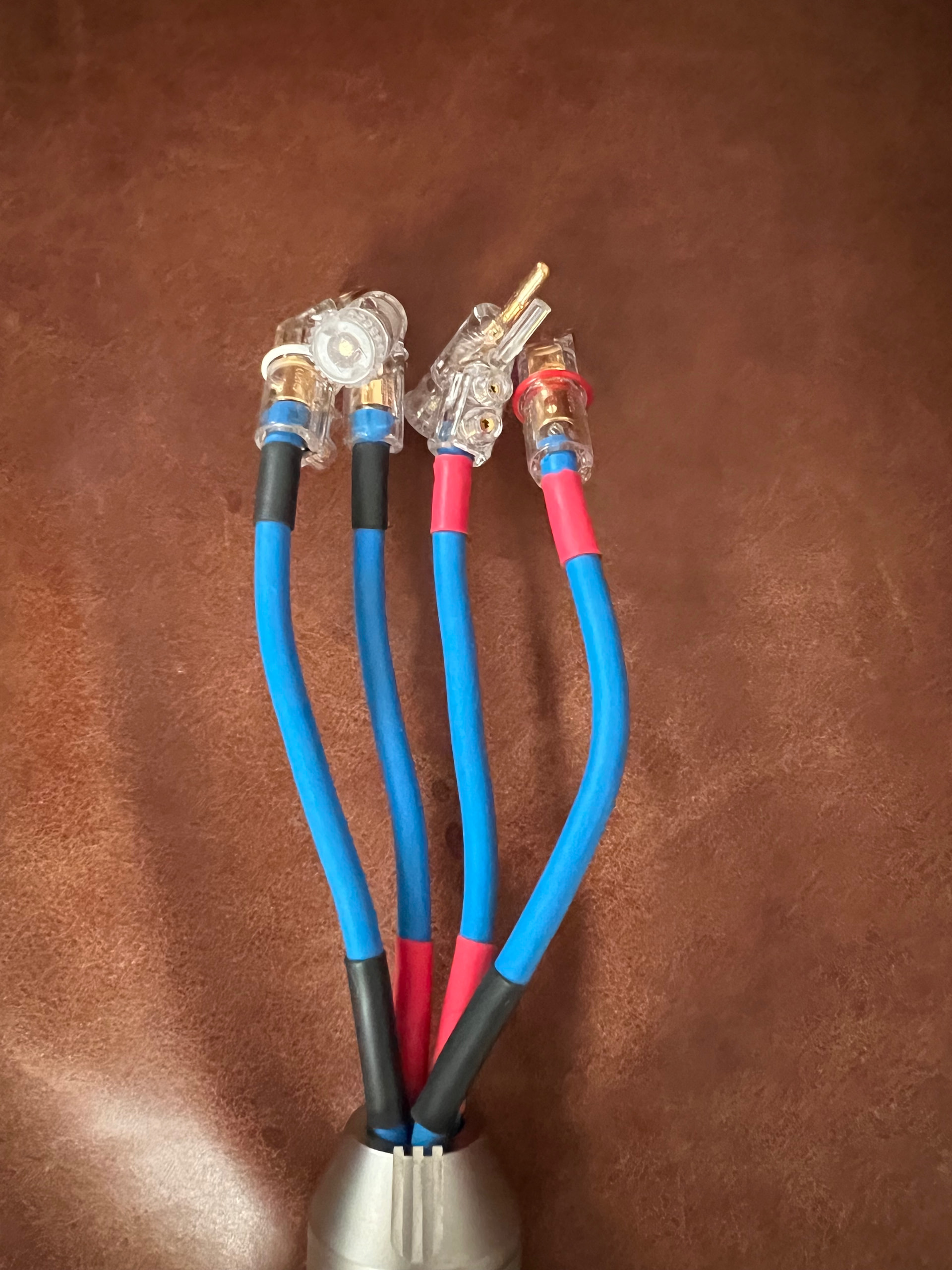
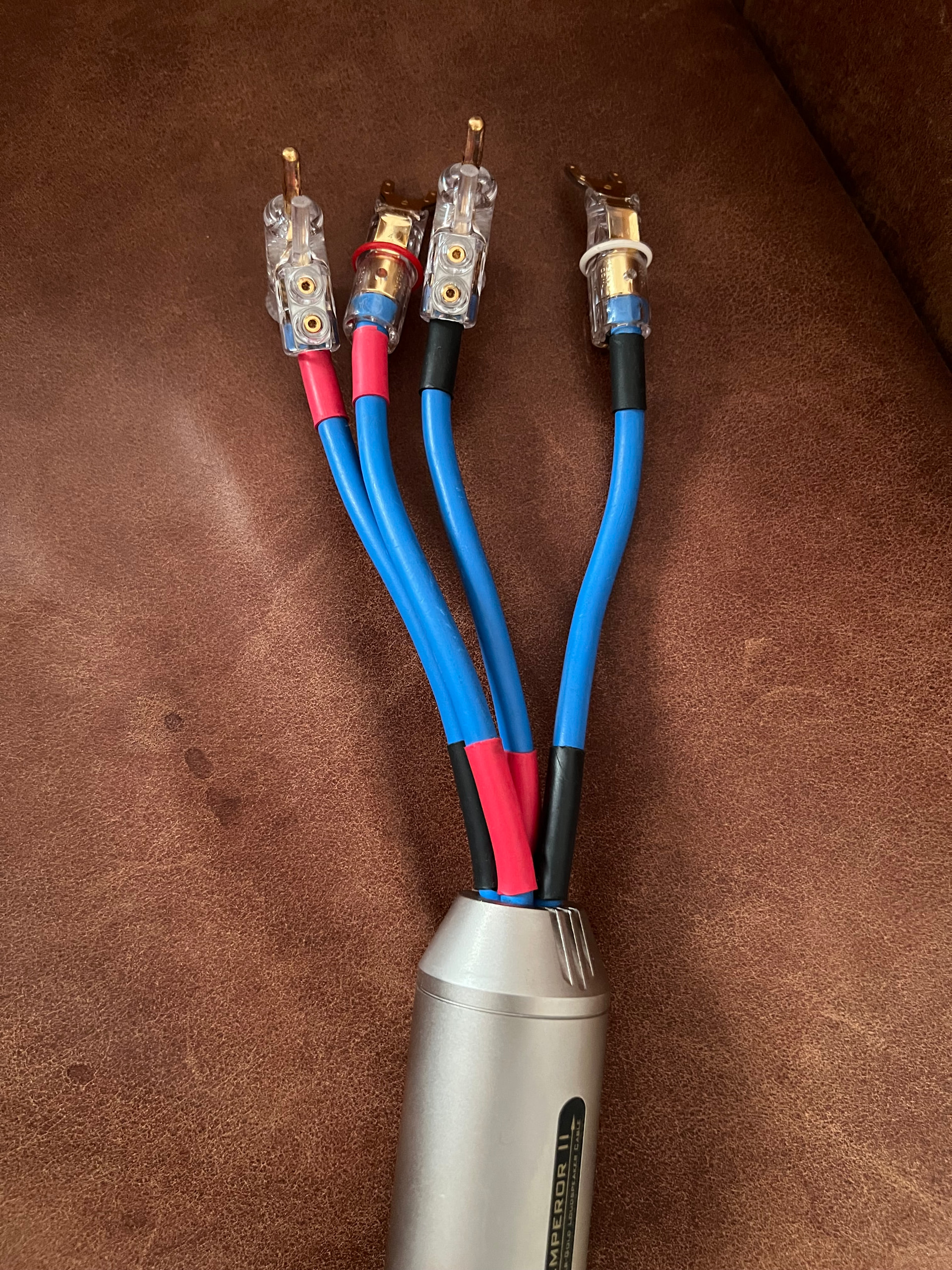
Looks like one banana red and one spade red, same with the other connection? So if possible stick a spade under the binding post and the banana in. A bit crowded perhaps or harder the bigger the cable. Start with the spades and after you tighten the binding post, you can insert the bananas.
Stenheim 5SE and Siltech 40th Ruby Crown speaker cable owner here.
Not sure on the Stenheim 3’s however like August said, at least on my 5SE’s, you should be able to utilize both plug in banana and spade on a single post.
My cables are also set up for biwire (5SE has 4 binding posts) however only on the speaker end. The amp end has 2 leads, black and red. Bananas all the way around on mine.
If you are happy with the cables you could send back to Siltech for re termination
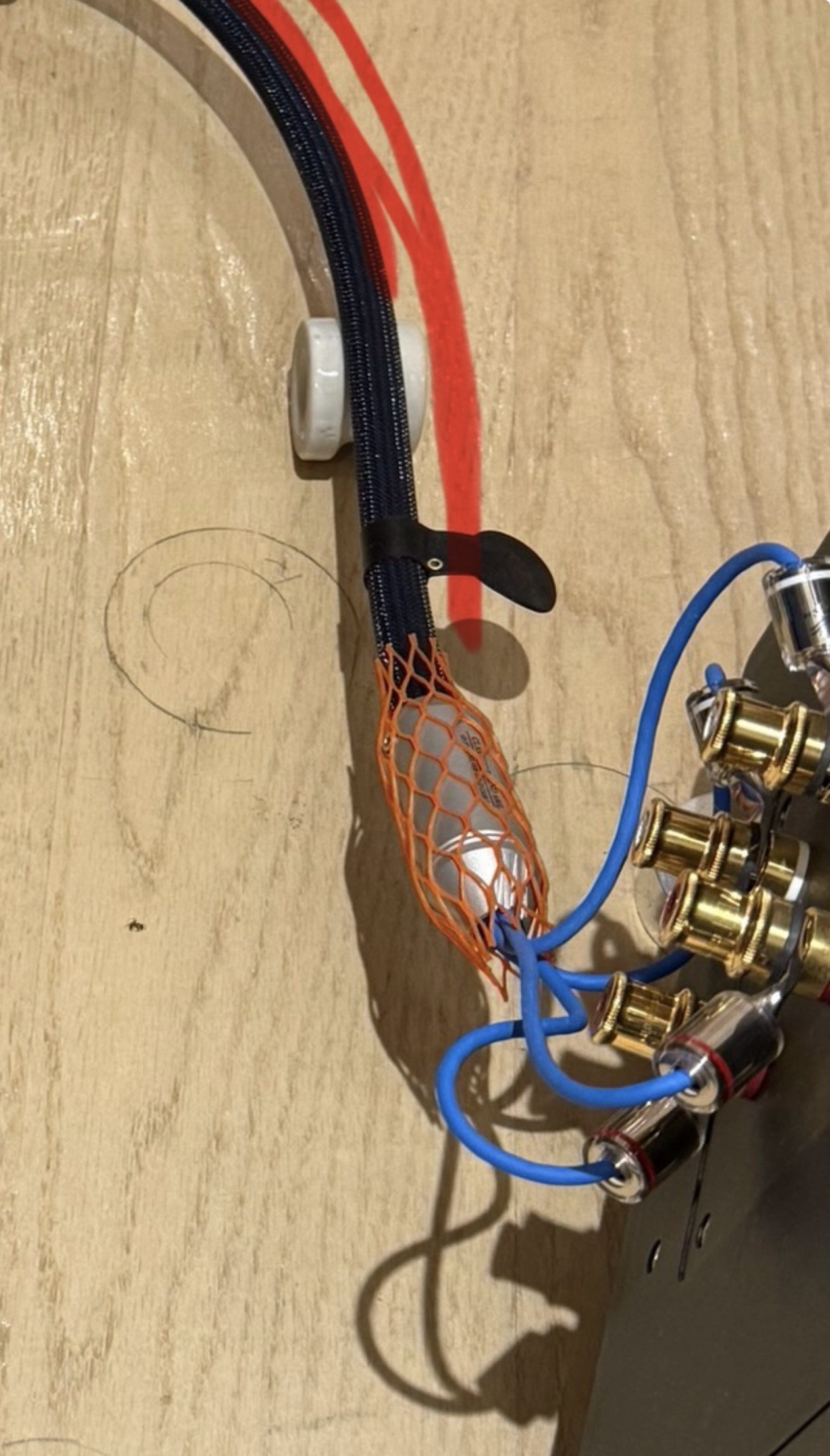
These were my previous Siltech 680 cables with spades. As you can see, yes, a bit messy.
But oh the sound……
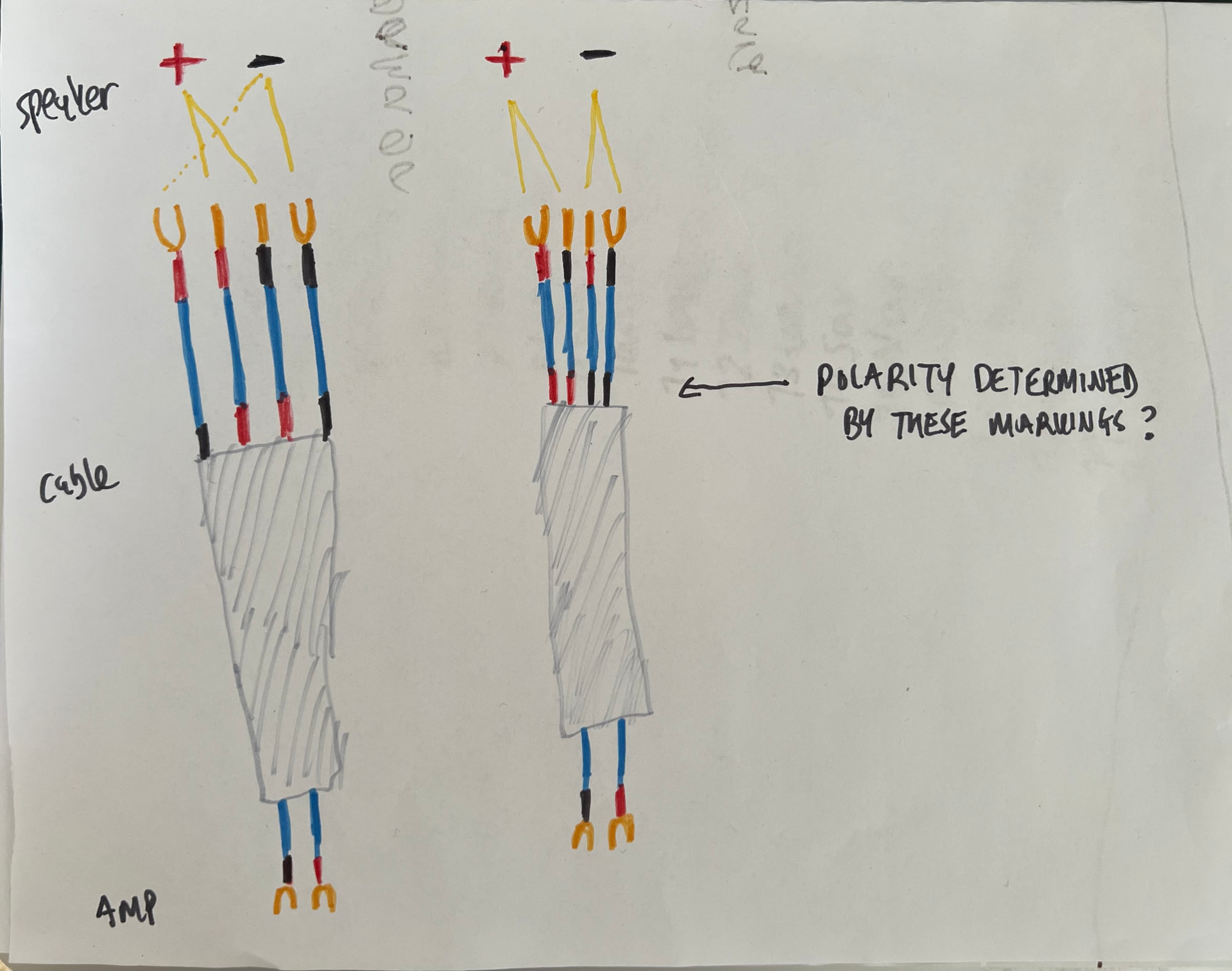
Thanks August / Gregg , I’m getting confused by the markings shown on the blue sheath . They are different for each cable . I’m assuming that the polarity is determined by the red / black colour banding shown at the grey end not the connector end . In which case I end up with 2 bananas in the same binding post of one speaker. Or do I use the bandings shown at the connector end . I’ve tried to simplify using this diagram -
Hi Nav,
I agree the color coding of the heatshrink on the bi-wire end of the cables is confusing. But surely, each wire at the bottom end of your picture is connected to two at the top end, it is simply a question of determining which two, which is easily done with a multimeter? Am I missing something?
Now that I’ve had a look at the original photo again, I agree there is something very confusing. If you look at my 680, you will see there are no heat shrink color sleeves on the wires. Instead, the spades are color coded.
Unfortunately, I am not at my house where my new 40th anniversary speaker cables reside, so I’m unable to see what is on those. I will say, though, that something is strange as on a single lead you have both a black and red heat shrink.
I realize these come from a dealer, so I would get them involved. These are trade-in - is the dealer an official Siltech dealer? The reason I ask, and I hate to say this, is that Siltech is known for having a big counterfeit problem. There are many knock offs coming from Asia. Siltech has combated this by releasing an iOS app which can determine the authenticity of the cable. On the cable should be a black leather hang tag which contains a NFC chip. The app will read the serial number, distributor, and model number of the cable. You might want to look into this.
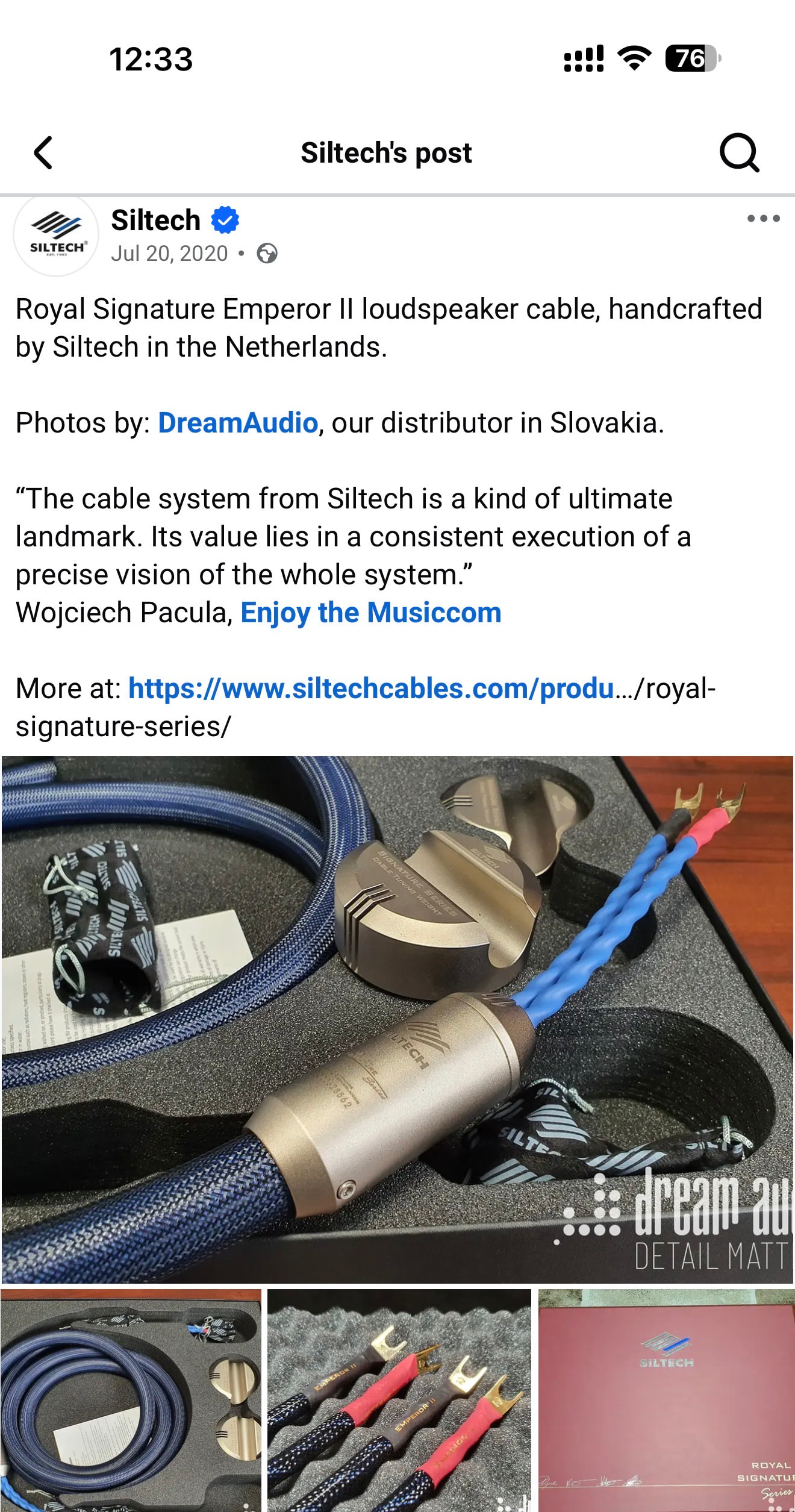
A quick search on the web found this photo from the official SILTECH website. I do not see multiple color-coded heat shrink on the cables.
Thanks Gregg / Andrew,
The dealer put me in touch with the original owner and I’ve just spoken with him . He was in fact the second owner and the cables have gone through some modifications and so the correct banding is shown by the colours at the connector end and not the grey base which makes the connecting tidier .
Unfortunately I don’t have a multimeter to hand but will purchase one next week as it’s useful to have.
I’ve seen all the paperwork / service reports for the cables - he traded in another newer siltech cable that has the NFC tag so I feel comfortable with their provenance but of course the final proof will be in the listening !
If you want to swing by sometime next week on your school run I can either test them for you or lend you a multimeter.
Thanks Andrew, as long as you don’t greet me at your door in your Arsenal shirt !
It was the only reason I offered! 

I bet you’ll still be wearing that shirt in Vienna 
I hadn’t actively noticed the two sets of heatshrinks with confusing colors. Was looking at the spades with red and white rings. Best to measure first as you don’t want to short-circuit your amp. Then mark the heatshrink with a marker with + and -
As it is not (yet) your cable I would do it like this, if it were my cable I would carefully remove the wrong coloured heatshrink of the two.
Only at the top near the spades on the originals. But this set @Stockholm1973 has seems to have been upgraded with WBT. Not sure what happened there but somebody added more heatshrinks that made sense to them but not to others…
Amp killer cable if I ever saw one 
So I went ahead and risked the life of my amp because the idea of seeing Andrew in an Arsenal shirt was too much for me . Fortunately the amp survived - the red and black bandings at the spade / connector end determined the polarity . I only managed an hour or so listening so far but the differences compared to my Audience cables are - 1. More slam 2. Better transients 3. Guitars sound even more realistic 4. Piano notes hang in the air more 5. The overall sound seems calmer in my challenging room .
I was hoping for more from male and female vocals but so far haven’t heard any noticeable difference .
Whether you believe it or not, some subscribe to the theory that cables, even secondhand ones which are theoretically already broken in, need several days to settle down after being removed from a system, but more particularly after being shipped. I wouldn’t be surprised if things improved considerably.
You’re not being thick—this is just bi-wire labeling confusion.
Those markings usually identify each pair, not “all reds = + / all blacks = −”. With single-wire speakers, you should only use one matched +/− pair and leave the second run unused (or bridged if designed for it).
Best move: confirm the original wiring from the dealer before forcing a setup.