Introducing MCD 16

Agreed on both counts, Ned. I love that my Von Schweikert speakers don’t pin me down. Lying next to the dog on the floor gives great results, and the hound isn’t known for seeking the sweet spot when he flops…

I got the prime seat in Vienna for the MCD demo and it was incredible. I didn’t try any of the others as a comparison, but it was a revelatory experience. Got me thinking about all sorts of things, one of which was how multi-channel systems might help those of us with imperfect rooms. (Likely everyone :-)) Could multi-channel room correction be a use case for those of us who listen mostly to two-channel recording, perhaps?

1 Like

Hello James Cook,

I’d really like to ask you something about the MC D16 DAC and the Vivaldi DAC. Do you think there is a noticeable difference in sound quality between the two?

Both movies and music are very important to me. My current system is based around a Trinnov Altitude 32 with a Trinnov Amplitude 8.

When I first saw the announcement that the legendary dCS had produced the MC D16 DAC specifically with home cinema in mind, I honestly couldn’t describe how excited I was. It felt like such a perfect combination of two worlds that I really love — dCS and home cinema.

In the end, I have just bought a second-hand dCS Vivaldi DAC and added it to my cinema system.

And wow… the sound is absolutely stunning.

Honestly, I can only describe the sound of dCS as aristocratic. It is so posh, so refined, yet at the same time completely spectacular. The dialogue in movies, the music, the sound of bullets and explosions — everything sounds incredibly real and beautifully controlled.

Sorry for the long introduction and all the waffle! :joy:

But here is my actual question:

Would the dCS MC D16’s Ring DAC be noticeably behind the Vivaldi Ring DAC, especially compared with the latest Vivaldi Apex version?

I’m particularly interested in how they compare for both home cinema and music, because I want to keep a system that can genuinely do both at a very high level.

I’d really appreciate your thoughts and experience with the MC D16 and Vivaldi.

Thank you !

2 Likes

Hi Martin,

The RingDAC boards in the MCD-16 are identical to the board in our 3rd generation products (such as Vivaldi), albeit not the APEX versions. The MCD-16 is also based on identical firmware, with our proprietary firmware-based upsampling, filtering, and clocking schemes. I’m not aware if there are any multi-channel DACs implemented this way, to the best of my knowledge the plug in DAC cards in the market leading processors are all based on commodity DAC chips.

Our multi-channel partners such as Trinnov and Perlisten tell us that the sound quality of the MCD is a revelation, something they have never experienced before in multi-channel. This is a completely new world for me, so until I have enough first hand experience I’ll take their word for it.

4 Likes

so that’s were all the old non-apex boards from the upgrades went :rofl:

2 Likes

That would have been very environmentally friendly.

1 Like

Just a couple of passing thoughts.

Andrew’s reply answers @MartinLeong and the MCD16 is not the equivalent of a 16 channel Vivaldi Apex. That led me to wonder why Apex was not chosen. I think many of us remember the price increase when Apex models replaced their predecessors. It was significant for many. I imagine that 16 Apex channels may have placed the MCD16 beyond the target price being worked to. Considering price, AFIAK although MCD16 has been announced and shown it has not yet entered production and thus final pricing us yet to be settled. Post Vienna estimates seem to lie between $60 K and $100K ( I cannot find further news). So an Apex version voulld be north of this.

The OP is serious about top end movie replay. Arguably the finest imaging hardware ids from Barco. Tay have recently acquired Naim and Focal. Now that Barco’s portfolio addresses both image and sound I wonder what that conjunction may result in?

First of all, I’d like to say a big thank you to Andrew for sharing this first-hand information with us. I feel very honoured to hear it directly from someone so closely involved with dCS.

I have to say, this is really exciting to hear. The fact that the MCD-16 uses dCS’s highest-level core technologies is very impressive.

I’m certainly not a technical person, and I have to admit that I don’t really understand the technical details behind all of this! But just thinking about each channel going through dCS’s proprietary upsampling, filtering and clocking, while still using the Ring DAC technology from the Vivaldi generation, makes me imagine what an extraordinary multichannel DAC this could be.

It really sounds like something quite unprecedented for high-end audio and home cinema.

Of course, I just hope the price will be a little more affordable! :joy:

Hi Martin,

Just to prevent misunderstanding, Andrew wrote 3rd generation products, that means Bartok - Rossini - Vivaldi. These all use the same RingDAC board. The 4th generation is Lina - Varèse.

1 Like

But not the Apex versions ( for clarity).

Knowing nothing about multi channel I am curious why APEX boards were not used

Just my speculation :thinking:

Comparing the Apex boards to non-Apex, the former is busier, not by a huge amount, but enough that in a chassis with 8 of them, the busier boards would increase thermals and possibly necessitating a fan inside, which would be less than ideal.

2 Likes

Haha, now you’ve really made me curious! :grinning_face_with_smiling_eyes:

If it were me, I’d say: just put the APEX boards in! Surely it must sound even better! :joy:

And from the owner’s point of view, they would definitely be the winner — eight APEX Ring DAC boards in one chassis is like having the heart of eight Vivaldi APEX DACs packed into a single MCD-16!

Now that would be one seriously exciting box of magic. :laughing:

Of course, I’m only joking… but I’m genuinely curious what the technical reason is for using the non-APEX boards.

1 Like

These are the reason i can think off, and obviously mean nothing.

1, cost. I should think that this is already going to cost a lot and having apex boards on all 8 would have only made it even more expensive.

2, space. Basically that, even bigger box needed.

3, heat, maybe, but probably not.

4, sound, now this one I think could be it along with cost, on a 2 channel system the apex really does make a big difference, but on a 8 channel or even more, does it ? I should think the difference a ring dac board is already making over what is currently available is huge, and with all this being fed into 16 channels of different speakers around the room, maybe the apex upgrade would be kind of lost??? As some speakers aren’t really doing much and that last bit of extra detail, etc would just be lost or not heard, if you get what I mean.

5, start with this, if it becomes a big seller, you already have an upgrade in the bag to offer.

6, lastly, the apex board needs different sign off requirements over the standard board, and may have been a stumbling block.

But as said these are all guesses and nothing more, we still don’t know the price, rumours are anything from £60k to £100k, but i think with 8 ring dac boards it’s not going to be £60k. I am certainly looking forward to hopefully hearing one at some point, but i am not into all this, and can’t see me ever being so, but even so I can only guess that it will be impressive.

Cheers dunc

1 Like

As Duncan is pointing out the reason may not be technical but commercial.

1 Like

MartinLeong to directly answer your first question, per channel the Vivaldi APEX will be higher quality than the MCD 16. What you are essentially asking here is if eight Vivaldi APEX DACs will provide higher quality than a single MCD 16, and the answer there is definitely yes. This is less to do with the specific DAC technology as it is having perfect channel pair separation, individual power supplies for each channel pair, processing for every channel pair and so on. You could feed 8 Vivaldi DACs directly from a Trinnov (and we do have customers running this type of setup with a mix of dCS DACs). This is definitely going to give ultimate resolution, but it takes a lot of space and is a significant investment.

However, the MCD 16 will work perfectly alongside a Vivaldi APEX DAC. You can keep the Vivaldi converting the left and right channels for example, and the MCD 16 can take over for all other channels. It’s an additive process.

Those who have been using or following dCS products for a while will know that we are, and have always been, a signal conversion company. Straying into the world of multichannel processing, video processing and the like isn’t our area of expertese. However, large multichannel products typically rely on the use of multichannel DAC chips to carry out the conversion to analogue – whether in the source device or in the downstream connected equipment. This represents a bottleneck in the system’s performance.

If the conversion can be carried out by a standalone converter with proper discrete D/A, with a class A output stage to drive the downstream equipment, everything gets better. The processor can stay in the digital domain, the amplifiers can be driven by physically large circuitry that generates a lot of heat so would be impractical to keep in the processor, and so the performance of both is properly unlocked. Plus, the Ring DAC is the best D/A converter available, so that helps a bit :blush:

In terms of the technologies we have used for the MCD 16, our standard Ring DAC is – to put it frankly – an enormous step up in performance compared to what is currently happening in a lot of multichannel systems. Our other DAC technologies, such as APEX or Differential, are used in specific products where appropriate, but they aren’t the default. This is the first time the Ring DAC has been used for more than 2 channels per chassis, and getting that working, sounding right, keeping it cool, making sure it is totally reliable, has been a huge task.

I love seeing the enthusiasm from the Community on our products, and I really can’t wait for you guys to get to hear the MCD 16 once we start shipping units. Some of our partners are naturally sceptical of a new product and won’t recommend it to their clients unless they themselves are totally convinced, and we’ve had dropped jaws across the board when showing it to them. This thing absolutely rips.

7 Likes

James, the more I learn about the MCD 16, the more I feel that this could be one of the most exciting steps forward in home cinema sound reproduction.

In my system, the Trinnov Altitude 32 is already doing all the things it does best:

• Decoding
• Processing
• Room correction
• Routing
• Bass management
• Optimizer

So what I really want is for the digital signal to be handed over to a truly exceptional D/A converter and brought back into the analogue world with as little compromise as possible.

This is exactly why I love my dCS Vivaldi APEX.

When the Trinnov has finished all the digital processing, the Vivaldi takes that digital information and turns it back into something that sounds beautifully real and natural. To my ears, it is not simply “good sound” — there is something incredibly refined and elegant about it.

One of the things that really surprised me was watching a scene where a group of people were dancing. I could actually hear the subtle contact of their shoes against the floor — tiny sounds that I had never noticed before, but suddenly sounded completely natural and believable.

That is what I find so special about dCS.

The sound is incredibly detailed, but it never feels clinical or forced. There is a kind of elegance, refinement and almost gentlemanly character to the presentation. It sounds sophisticated, beautiful and extremely natural at the same time.

So when I hear you describe the MCD 16 as an enormous step up for multichannel systems, and especially when you say “this thing absolutely rips” :joy:, you can imagine how interested I am.

If the MCD 16 can bring that kind of dCS character, resolution and realism to the rest of the channels in a Trinnov-based home cinema, I honestly think it could be one of the most significant developments in high-end home cinema sound for a very long time.

I really can’t wait to hear it!

2 Likes

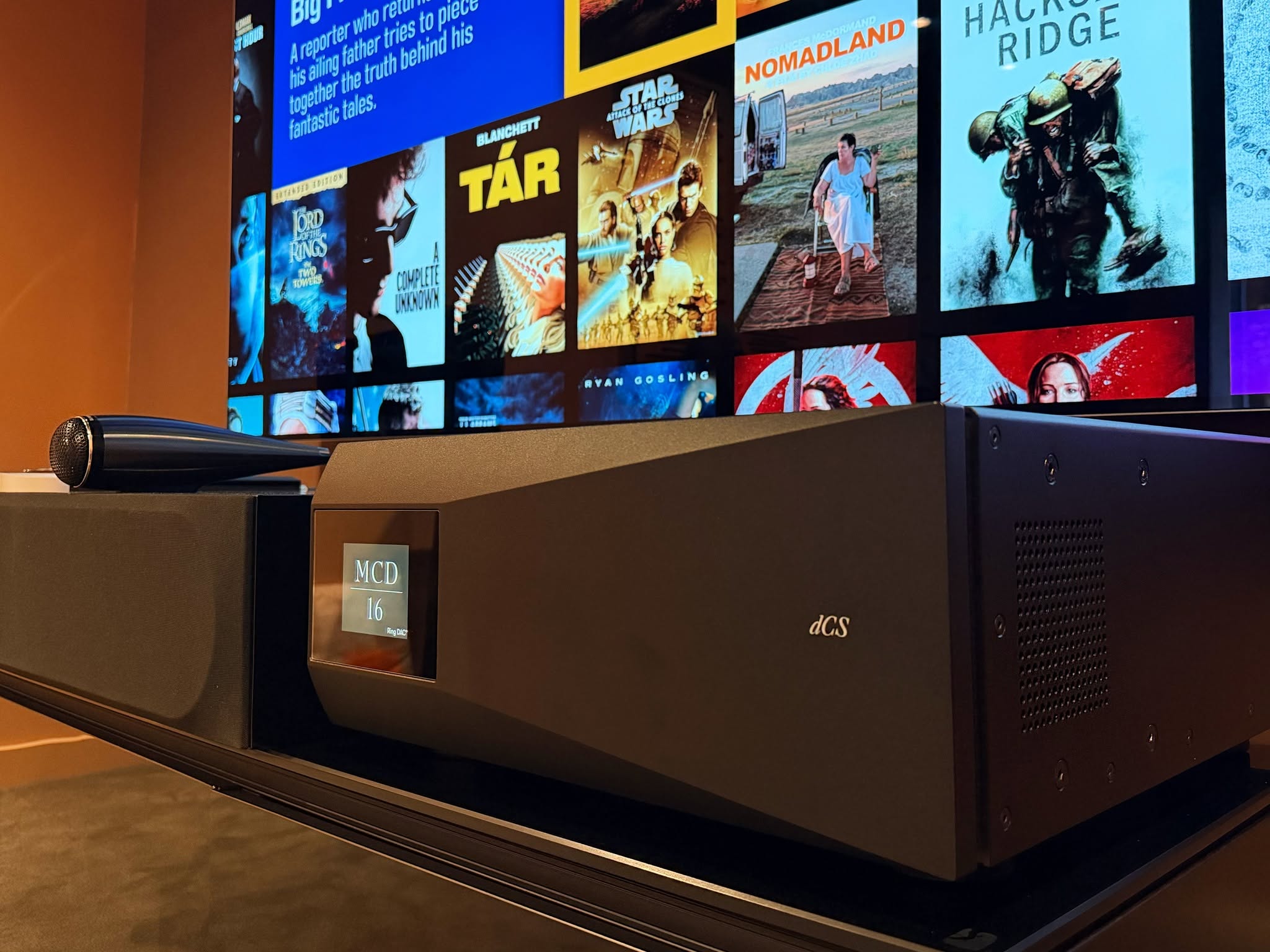
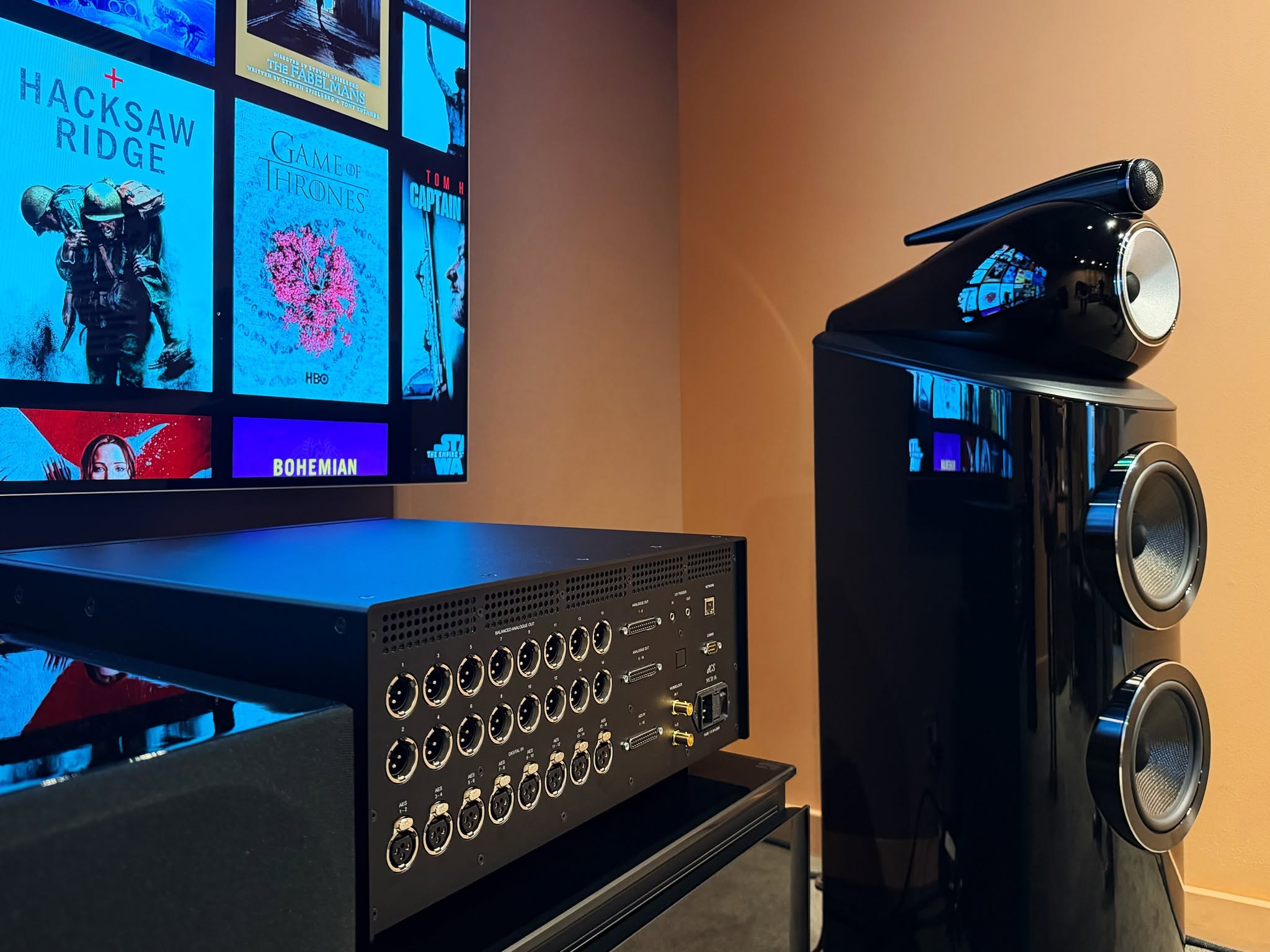
Gorgeous shots of the MCD 16 against a Kaleidescape screen backdrop showcased @ Definitive :heart_eyes:

7 Likes

Those loudspeakers remind me of something…
:thinking:

2 Likes

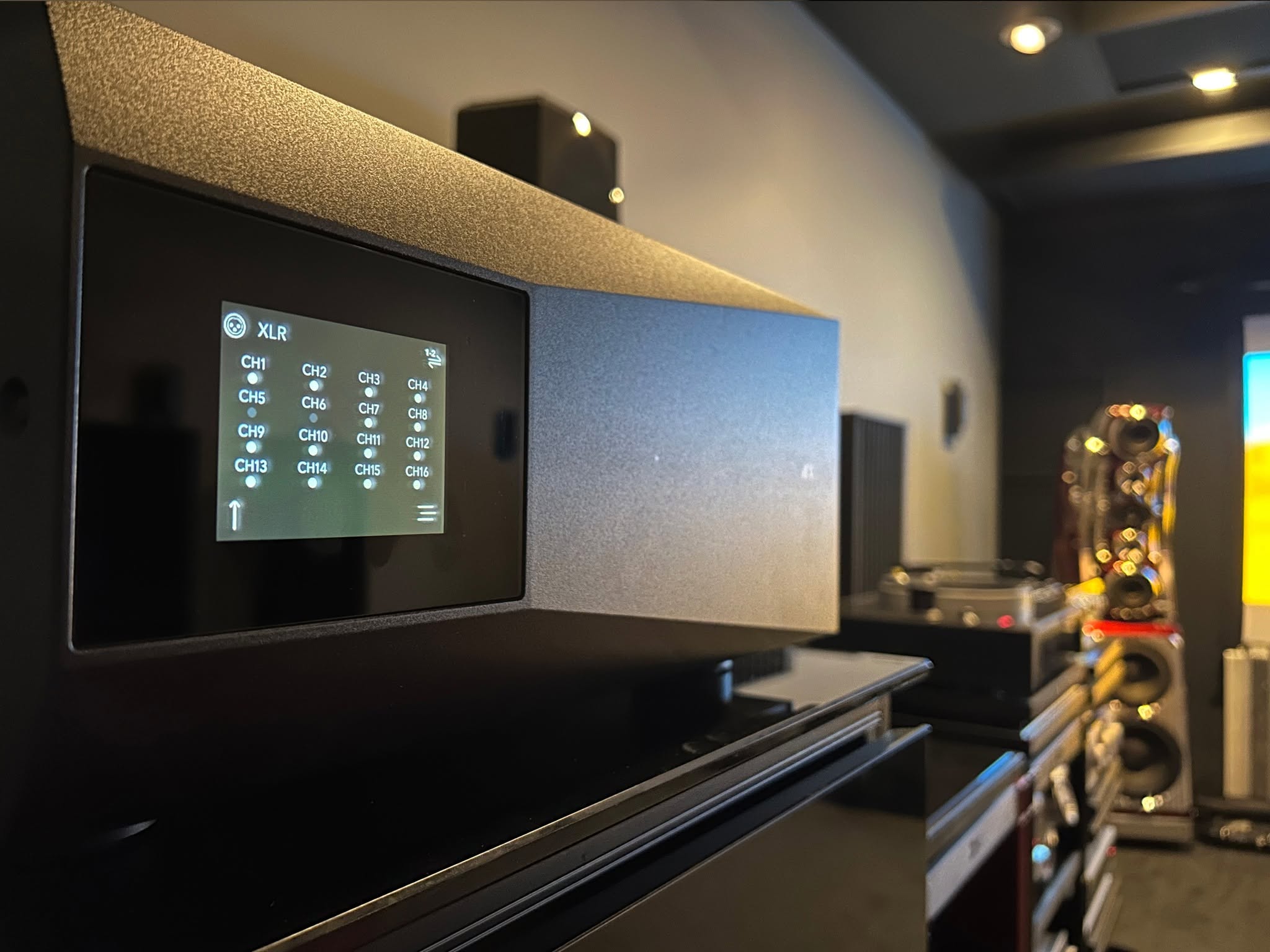
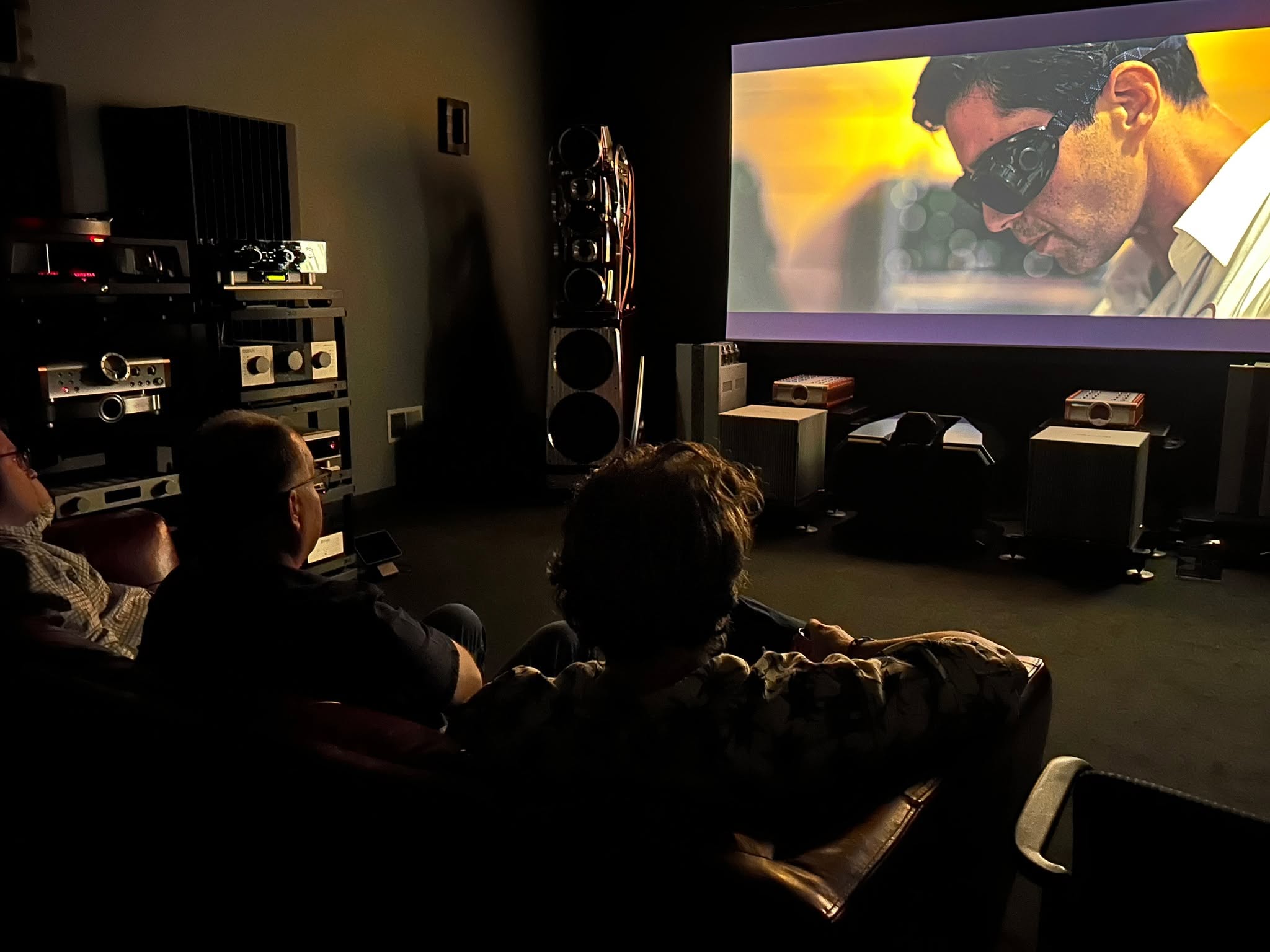
More gorgeous MCD 16 pictures from dCS’ Facebook page with a WA Autobiography in the background, and I think I spy a pair of Octave Jubilee Class A Monoblocs :heart_eyes:

6 Likes

I didn’t attend but that appears to be Paragon Sight & Sounds Audition Room 1.

2 Likes