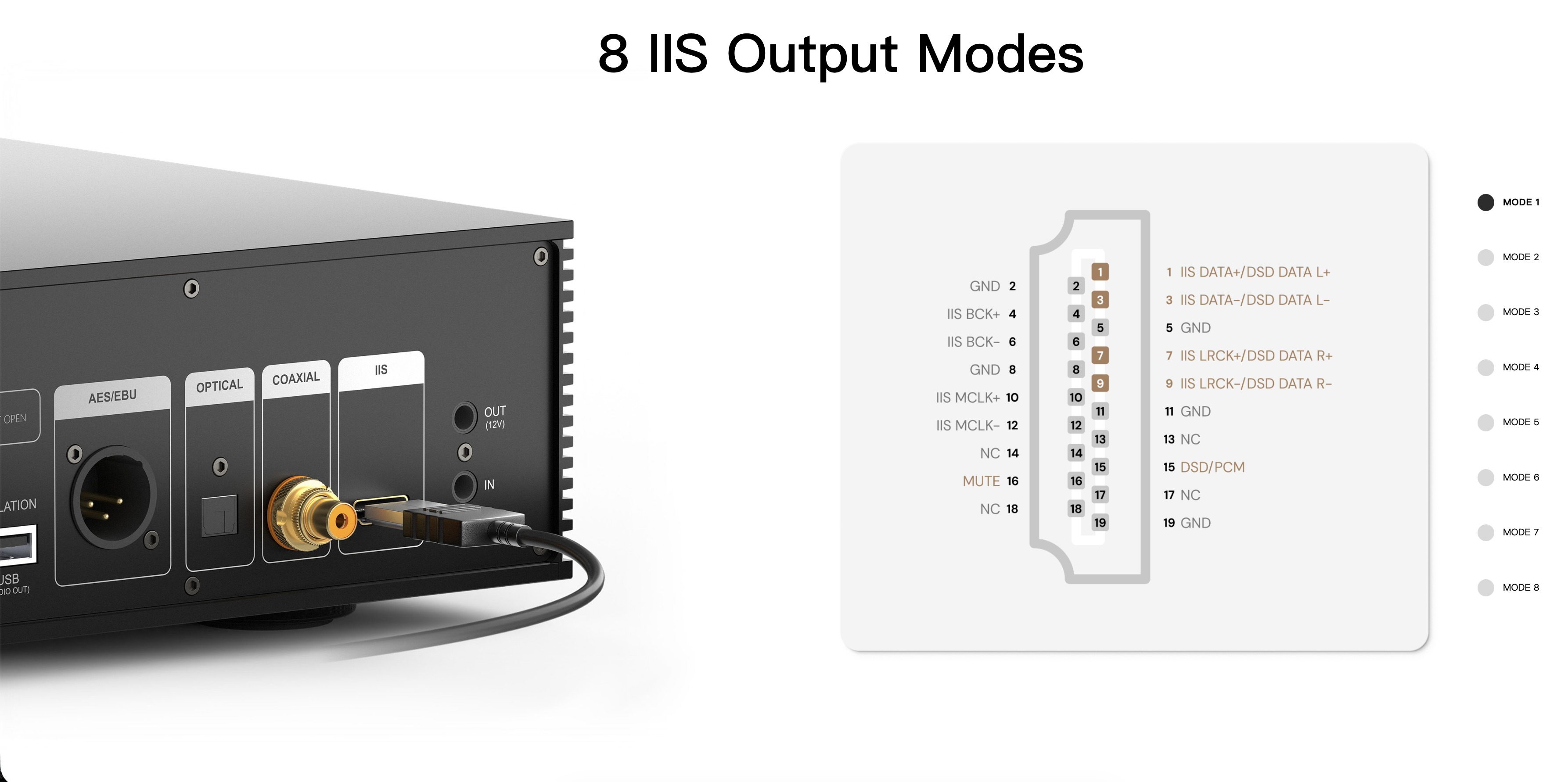
As a few of you may well know, I am on the search for a new Streamer Transport, and I may have just found one!
Many of the newer Streamers now include a i2s output. The Transport I am looking at does have a i2s output, with 8 output modes to accommodate various brands of DAC.
dCS does not have i2s on any of it’s products, even the Varese Apex. Is there a particular reason for this, or is it the fact that dCS recommend LAN over anything else, so see no point in adding i2s?
Listening to what others have said, who have brands of DAC with i2s, it’s not that much to shout about compared to USB.
“but that doesn’t alter the fact it’s not a format that we deem as appropriate to use in this way, especially considering formats like S/PDIF exist specifically for this purpose”.
It does, but it is a raw clock - one line clocks each bit individually, one clocks the transition between left and right channels. There is a provision for a “Master Clock” on 4-wire I2S but that doesn’t directly clock the data whereas the other two do.
If you mess up the transition of the bit clock and L/R clock, it directly messes up the data which causes really nasty audible effects. Not a problem when running I2S on a PCB with fixed track lengths, but it does become a real problem when running it through a cable where things get infinitely more variable.
Clocking AES or S/PDIF is an entirely different ballgame - one which doesn’t fundamentally break if you do something so bold as move the cable slightly
 I am on the search for a new Streamer Transport, and I may have just found one!