If you have some new insights into the Innuos platform/architecture, please share and I’d be happy to discuss. Otherwise, please feel free to interpret in any way you like 
Thanks, I feel liberated.
I don’t have time for the marketing nonsense one reads about some devices which suggests that somehow a ground-up design is inherently superior to a design using proven components. It makes sense as justification for a device’s price, I guess (cost of R&D, small batch manufacturing etc) but that’s about it.
I don’t have time for folk who suggest that anything other than cost-plus-margin pricing, which is a minimum survival strategy for any business in any sector, is the only pricing strategy which can be justified. It completely ignores the value the product delivers to the end consumer who is quite capable of making an adult decision about whether the bang is worth the buck, in our case sonically.
If you’ve heard one of these Innuos devices and have feedback on how well it performs and whether the value proposition makes sense to you then do share!
Peace and love
1 Like
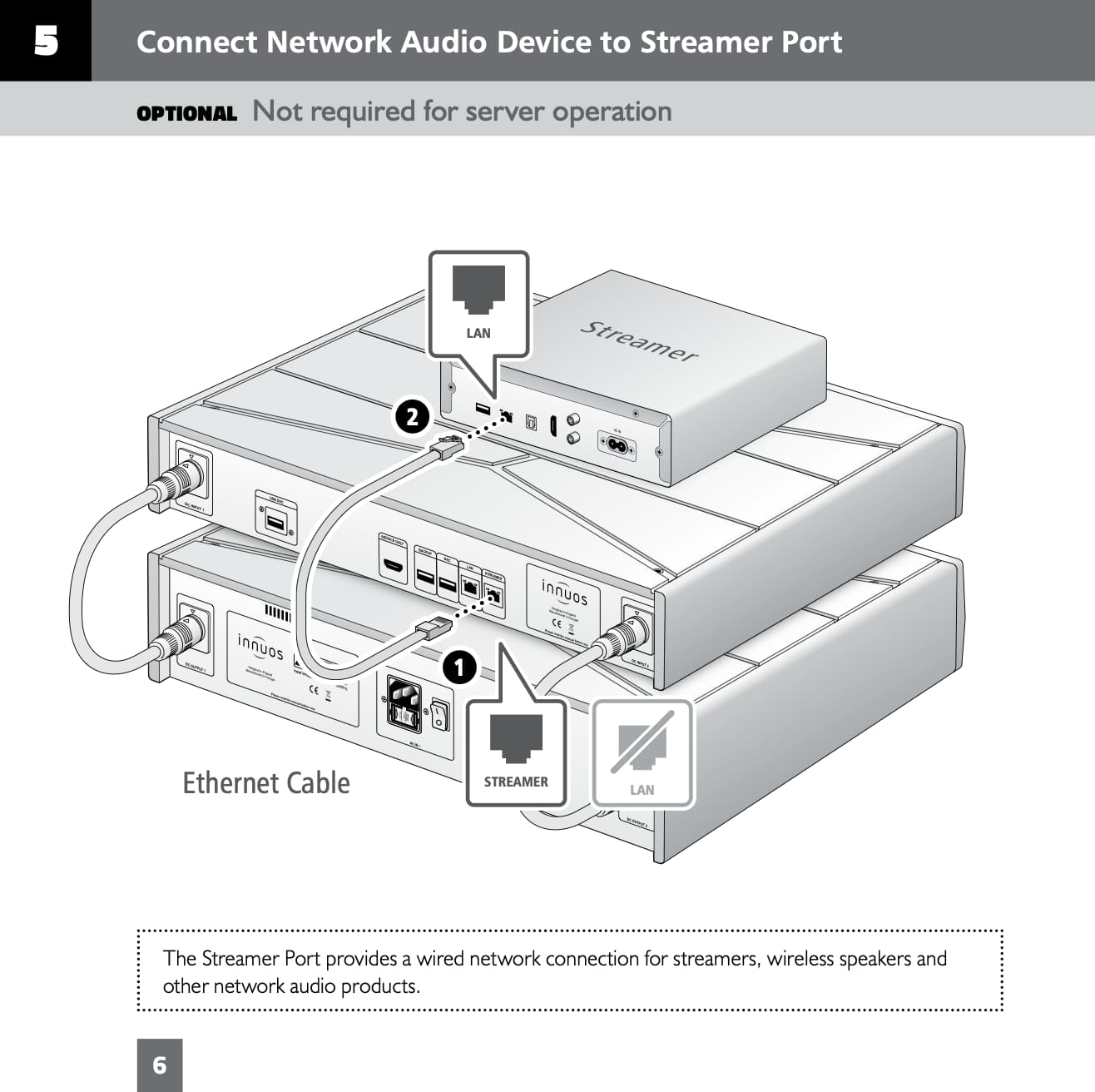
Spoken to a guy that has the innuos statement and apparently the streamer port is for adding a streamer to the statement if you don’t want to use the one it has.
So it looks like it’s an input rather than like the melco player port.
He said it was usb out to a dac
That’s not the case Duncan, the Streamer port on the Innuos is a standard Ethernet port that can be connected to any Network Streamer, just like the “Player” port on the Melcos.
The thing to keep in mind is that all these “Audiophile Server” platforms use standard motherboards from suppliers like Supermicro, with retrofitting of LPSUs, re-clockers, and whatnot, but they’re all essentially standard Mini-ITX Intel compute motherboards with standard Ethernet ports, running some version of Linux. They’re not custom embedded systems.
3 Likes
Just saying what he said.
Not sure if you say connect the streamer port to say a rossini if you can play the stored music through it
We have Innuos users here, even of the Statement . Perhaps one or more would like to comment?
1 Like
Yes you could. Innuos integrates the AssetUPnP Server into their platform.
Hi Anup,
This is a possible setup:
Router-------LAN 1Innuos-----LAN 2Innuos------Rossini
With that, you can play stored music or stream from internet through Innuos.
(not sure, if that is the question  )
)
Yes I’m aware, same as the Melco in fact (when placed into Bridge mode). It was Duncan who was asking, not me
1 Like
So you can use the player port and it will play all the strored music to your dac then, just like a melco ?
If so it does look like innuos need to look at how they word the instructions on this in the manual, as it looks like owners haven’t got a clue how it works as well.
I would also like to know if it will stream from this port using the built in streamer or is that just usb out like the melco.
So you can use the player port and it will play all the strored music to your dac then, just like a melco ?
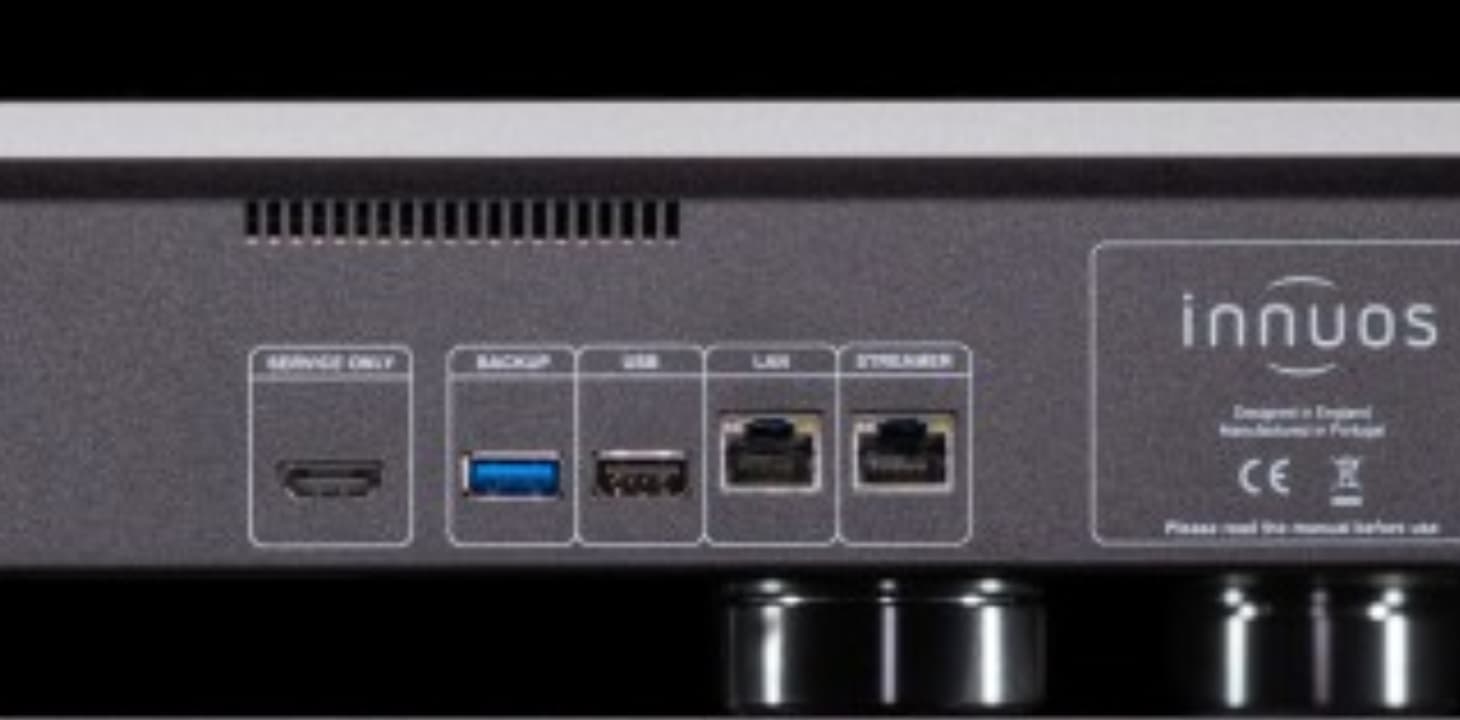
yes, you can use the LAN Streamer port (here on the far right in the picture)
If so it does look like innuos need to look at how they word the instructions on this in the manual, as it looks like owners haven’t got a clue how it works as well.
can’t comment on that
I would also like to know if it will stream from this port using the built in streamer or is that just usb out like the melco.
you can connect your DAC via USB port on the Innuos or you can stream like I mention above with Streamer port. USB port is a dedicated port with some voodoo build in. I prefer streaming via Ethernet with my Rossini
One point: the setup defines the controll SW (f.ex you see the streaming endpoint in the Innups app called Sense - it’s pretty good by the way…)
1 Like
I have my router connected to the LAN port on my Innuos, and my Lina connected to the STREAMER port on the Innuos. But I don’t think the use of the STREAMER port is required. It’s just convenient for my setup. Per Innuos, so long as your streaming DAC and the Zen or Statement device are “connected on the same network subnet” you can stream to your DAC from the Innuos file database, or streaming services, or other file servers on your network. I can use Innuos Sense to do so, or I can use Mosaic to do so. I prefer the functionality of Sense, but either way you get the same error checked and corrected data going into the streaming DAC.
1 Like
Hi guys,
OK so this whole two ethernet ports on a server thing seems to be getting quite messy here so lets cover it quickly.
Not all audio servers are using off the shelf motherboards but some definitely are - I know that a number of them are using “custom” boards but that’s a separate discussion / debate and the discussion here is LAN and Streamer or LAN and Player ports.
There are two main uses for the streamer / player port in this setup…
-
Where there is one ethernet cable to the HiFi stack and the user doesn’t want to put in a network switch, the second port can in effect be the server acting as an Ethernet switch and providing a second port to connect to.
This can be touted by the server manufacturer as having sonic benefits such as the server isolating the streamer from all the network activity that is going on on the main network but that is a function of a network switch anyway (network switches filter out unnecessary traffic from their ports, network hubs just blitz out everything on all ports but they no longer exist in the real world) so take that claim with that knowledge in your shirt pocket.
You also need to be aware that this means that the server also has to pass through any Ethernet traffic that the streamer pulls from the network (such as from the internet) so all that has to be handled by the processor on the server - it’s rare that these instances have dedicated Ethernet switch hardware. -
If you are using a server and streamer in a setup where there isn’t an outgoing connection from the server to a router (yes, it is VERY unlikely and contrived nowadays but it USED to happen) then SOMETIMES the server can be set up to act as a DHCP server as well so that the streamer can then access the UPnP server on the server. Of course unless you are controlling the streamer from an IR remote using its own built in display then normally you would have some kind of app for control that would need wireless connectivity which obviously you don’t get here.
For me, I wouldn’t ever use a player or streamer port on a server …
5 Likes
Yes definitely, my view is you may not be getting a lot of feedback because I believe and I count myself as one who is confused by UPnP? Roon, Mosaic etc. Functionality aside (the marketing materials of each do explain) The actual connection benefit SQ wise more understood I believe will generate the interest and time in the option to want more?
Hi, I have for months been trying a number of things as discussed here.
The Rig:
Rossini Apex Player,
Headonia 800b Tube Amp
Innuos Zenith MK 3
MacMini m4
Also have a Roon Nucleus one and Synology NAS (both no longer connected)
I mostly use locally ripped cd files with an occasional venture into Qbuz so storing my files for playback is top importance. I also play physical CD’s of my favorite “out of print” music.
Currently my Rossini is directly connected to my COX cable router.
My Zenith MK3 is also directly connected to the Cox router port
My ultimate goal is SQ
I also have a Synology NAS running MinimServer. I found that the Zen mk 3 via lan sounds better than the NAS Mini set up which I have tested for months and finally disconnected the nas and went with using the MK 3 for storage of my files utilizing the Rossini streamer.( USB on the MK3 did not sound as good with rossini)
Mosaic is ok but not the best INHO with MinimServer UI wise as its for me like working with DOS computer files to set up your music. So Innuos sense works better for me.
Here is the Kicker. ROON overall storage and UI wise works the best, has a great interface and with the roon one nucleus solves the storage internally with a fast SSD. BUT IT JUST DOES NOT SOUND AS GOOD AS Any OF THE ABOVE solutions. I want to love it and be done but my files simply sound “Vailed”
Then there is a solution that for me Has a UI almost as good as Roon, Sounds as good as the Innuos server files and has the storage connection options. and that’s AUDIRVANA… UNFORTUNIATELY for whatever reason I cannot get it stabliized . It is hit and miss as to any given day if it can see my Rossini Player. I have done trouble shooting with Audrivava including screen sharing from France ( that yielded an Apple issue in the logs they say since corrected, …no one can seem to offer any reason why Audrivana and Rossini still don’t play well together sadly. I think I read where DCS also has worked with Audrivana??? not just MinimServer. Not sure where things stand there? If this were stabilized I would be done 100%. Great interface,Great sound, good storage file options to point to in their file selection options and many other nice to haves but If I can’t turn it on and have it just work its all for nothing…
To all the powers out there . Here is hoping with Roon figures out why their SQ is not TOTL in some set ups? It would be the winner hands down. Audrivana would be just as good if I could ever get it to work consistently …anywhy just wanted to share my journey so today Its Rossini with MK3 lan …next link in the chain is to get the Rossini Master Clock and hopefully be done for a while
This sounds like you are using the ‘Folders and files’ view within MinimServer - if you go a level ‘further back’ in MinimServer then you should see options to browse by Artists, Albums, Genres etc. which use the file fagging information to generate the lists that you see (so make sure your tagging is correct) rather than just navigating around the folders directly.
BR
Phil
Late to this thread but wanted to say that I think this is a very thoughtful and well reasoned post!
I’ll just add my personal experience…after I added the Vivaldi Clock to my Vivaldi DAC/Upsampler, the improvement was surprising (given the excellent clock already in DAC) and motivated me to see if the clock would bring further improvements to my music server. (I had tried to save money and just use Mosaic but to my ear the N10 has a clear step up.) I auditioned the N30 with the dongle and despite a whole slew of clock cables, and found a further improvement in SQ.
1 Like
Morning @struts001
Sorry, very late in on this post, due to my usual chopping and changing Servers (Roon Nucleus, Melco N1-38).
I personally strive for the best possible SQ, and cash permitting, try to squeeze as much out of a recording as possible.
Reading a post from last year, about, “nearly all streamers, including dCS use the same ‘Board’. Agreed, it’s what’s built around that board that matters.
I am in the process of looking for a new server/Transport with storage. At present I am using just Qobuz. So in reply to the quote, is there any point in spending £10,000 plus on a Server/storage?
David, there is no point in my recommending anything as we have been there in the past.
It is , however, worth pointing out that “ streaming” means a number of different things. There is streaming from local files or streaming from services such as Qobuz or Tidal. What applies in one case may not in the other. Or it may  .
.
As well as SQ attention needs be made to software compatibility especially as Mosaic provides features unique to dCS.
Pursuit of this as an abstract aim will only involve you in a lifetime of upgrading and expenditure. There is always someone offering a “ better” product which turns out to be much of the same again.
Try before you buy especially given your past experience as reported in part by you. However barriers to this exist in terms of dealers and those willing to loan or provide time limited money back guarantees.
Sorry David, you may or may not be aware that struts001 (“the ostrich”) is now dormant and since joining dCS in November of 2024 I am now posting as AndrewS.
To preface my answer I would suggest you first reread my first post in this thread. You should consider your “Is there any point…?” question in the context of the three areas of difference: functional differences, non-functional differences (convenience) and non-functional differences (sound quality). I take it from your statement “I personally strive for the best SQ” that your focus is on the latter so while there are clear functional and usability differences between different server solutions, any of which may be enormously attractive to you and on which only you can be the judge, I’ll mostly ignore them here.
A network attached storage device (NAS) is an asynchronous disk array connected over the network (ethernet) interface. To access it from your Bartók requires a UPnP server (which provides the indexing capability that enables flexible search and retrieval) which you control from Mosaic or some other compatible UI/app of your choice. The UPnP server can run either on a general purpose PC (Mac, Windows or Linux) anywhere on your network, on the majority of NAS devices, or on the majority of dedicated 3rd party music servers. The latter often provide enhanced user interfaces for setup and configuration, the native MinimServer (the UPnP server we recommend) UI is somewhat “spartan”.
I personally run MinimServer on an ASUS NUC running DietPi as described here. While installing DietPi and the MinimServer and Roon Server apps and configuring them to access my NAS was fairly straightforward it did require some basic familiarity with Linux, so definitely not something for the IT-illiterate. Once set up however I have never had to intervene since.
I store my music on a Qnap NAS (see here) which sits in my network closet well away from my audio system and is powered by an external HDPLEX power supply. The Qnap also has the ability to run both MinimServer and Roon Server (if relevant) locally, I have just chosen not to do it this way. As you will read in the thread, the Qnap is quite a sophisticated enterprise-grade product whose enormous flexibility and configurability makes setup quite unsuitable for the IT-illiterate or faint-hearted. However once set up it has become a self-playing piano and I have not had to intervene since.
From a Sound Quality perspective, there is no known way that a storage device can affect the sound quality of an audio system through the signal path. The transfer is bit perfect as guaranteed by the IP network stack as long as the basic performance (read speed and network bandwidth) is sufficient to prevent buffer underflow (which any modern NAS should be able to exceed by many, many orders of magnitude). Since the interface is asynchronous (buffered at multiple intermediate points) interface jitter is a non-issue. Now of course there are other ways the storage device could affect sound quality outside the signal path, such as emitting EMI or injecting noise into the ring main but I have tried to address those in my setup.
Now many people (both on this forum and outside) have claimed that there are subjective differences between asynchronous storage systems and there is no way I can argue with or disprove their experiences. However I have yet to see anybody offer any solid technical arguments for the mechanisms behind any such differences and so the engineer in me has no particular interest in exploring them further. Again, there can be manifold other differences in functional and non-functional capabilities but those are a different kettle of fish.
So to summarize:
- My own choices here are offered purely by way of example, of both the huge variety of ways there are to skin this particular cat, and also to illuminate some of the trade-offs. They are in no way offered as recommendations, either by me personally or by dCS. They were my choices made for my system and it should be clear from my descriptions that they will certainly not be suitable for all. Hopefully the prerequisite skills required will be clear enough from my descriptions. For the totally IT-illiterate I personally think the audio-specific music server products have a lot to offer, although how much that is worth is something only you can judge.
- If anybody has theoretical arguments that explain why another storage system or music server product would offer better sound quality than mine I would invite them to put them forward. Not just citing features such as casework, specially chosen hard disks, “audiophile” power supplies or re-clocked network ports, but the actual mechanism by which they influence what happens in the DAC.
- I am not ruling out that sound quality differences exist, and that such differences might be explained by mechanisms we have yet to identify. We don’t know what we don’t know. All I am saying is that based on our current understanding there is no obvious explanation for why one asynchronous storage system (notwithstanding non-signal path related aspects such as EMI and mains noise) should sound fundamentally different to another. So in my opinion the differences, and the answer to your “Is there any point..?” question lie elsewhere.
8 Likes