Not exactly hifi but a bit related,it reminds me when I get a new car. First week: “Great car but radio sounds terrible. Guess they cheaped out on that.”
After 1 month: “Actually radio is not that bad”.
After 2 months: “Damn fine radio. Much much better then the one in the old car!”
Maybe I should clarify my experience. A few years ago I had the Acoustic Zen Satori Shotgun LS cables. I then bought a pair of Acoustic Zen Absolute Silver, their top of the line cable. It didn’t impress me at first and I did switch between the cables to make sure of what I heard. Ofcourse, the Satori had the benefit of being a true double run vs. a singe wire top of the line cable. I decided to give it some time and lo and behold the Absolutes really started to open up and sound better day by day. After some time the improvement had finished and I compared it again to the Satori to find that now the Absolute was a lot better.
Not sure if I have had similar lengthy burn-in experiences, although my current LS-cable and interconnects started out at a great level and did improve some more after some more use, but not like that experience with the AZ Absolute which started out less well than expected.
That expensive cables are worth it because they’re designed with more than just static LCR in mind
I’d agree. Generally speaking, I think it’s fair to say claims of “days or weeks of burn-in” time as properly debunkable (is there such a word? ).
However, other than the Audioholics article from 20 years ago, I haven’t seen anyone else attempt to “debunk” Dielectric Absorption, have you? IMHO, that article had one major problem with it; it only explored speaker cable instances, which typically involves 2-orders of magnitude lower impedances as compared to interconnects.
Nevertheless, even in high-impedance scenarios (e.g. Amps with 200K Ohm input impedances, which are common), the impact of Dielectric Absorption in the interconnect cables is still rather well below the threshold of what we should be able to hear.
There have been a few, such as Matthew Bond’s Not an Audiophile podcast episode but none with the same engineering rigour as Gene Dellasala. ChatGPT didn’t turn any up either.
It may already have been pointed out, but even the best measurement tools can’t measure what we hear. Tools can’t measure the quality of a person’s singing voice, whether a Stradovarious is superior to a Bellafina, or what measured criteria can determine if one wire will sound better than another.
That being said, there are only so many things that can be done to improve the sound of a wire, but there are unlimited ways for a manufacturer to describe why it’s wire making methods justify 4 and 5 figure prices.
I believe that different cables sound different; sometimes significantly, sometimes subtly. And there is not much correlation between sound quality and price. And any particular cable won’t provide the same result in different systems.
I’d never heard of Matthew Bond Audio before, so I gave the PodCast a listen. Not bad.
Did you listen to the entire PodCast? He didn’t debunk Dielectric Absorption, in fact quite the opposite, he suggests its effects are audible. Give it a listen, from 0:20:30 -to- 0:23:15 (he starts off by discussing directional cables).
I tested the following prompt on ChatGPT, the response was interesting.
Quantify the impact of dielectric absorption on audio frequencies when using a 7 meter interconnect cable with PTFE insulator and 100pF/m capacitance connecting a pre-amplifier with 3 ohm output impedance into an amplifier with 200k Ohm input impedance.
(No surprises with the results. The gist of which was that the effects are far below hearing thresholds. Gemini had a far briefer response).
Interesting. I can’t recall ever having read that part. Measuring cable induced distortion aside, given the capacitive nature of Dielectric Absorption, I’m surprised there was no impulse response measurement & FFT comparisons. I wonder if that would have differentiated the cables
I did, but it was a year-or-two ago now. My recollection was that he was in broadly in agreement that DA was not relevant in audio applications but I’ll have another listen today. Generally though I find him sensible and his podcasts worth a listen.
In answer to my own post…The Sommer cables arrived yesterday. I gave them a few hours to acclimatise. During that time I played my four test tracks using the Tellurium Black 2 XLRs and also the Entriq Primer Hexa XLRs, both on loan from my dealer.
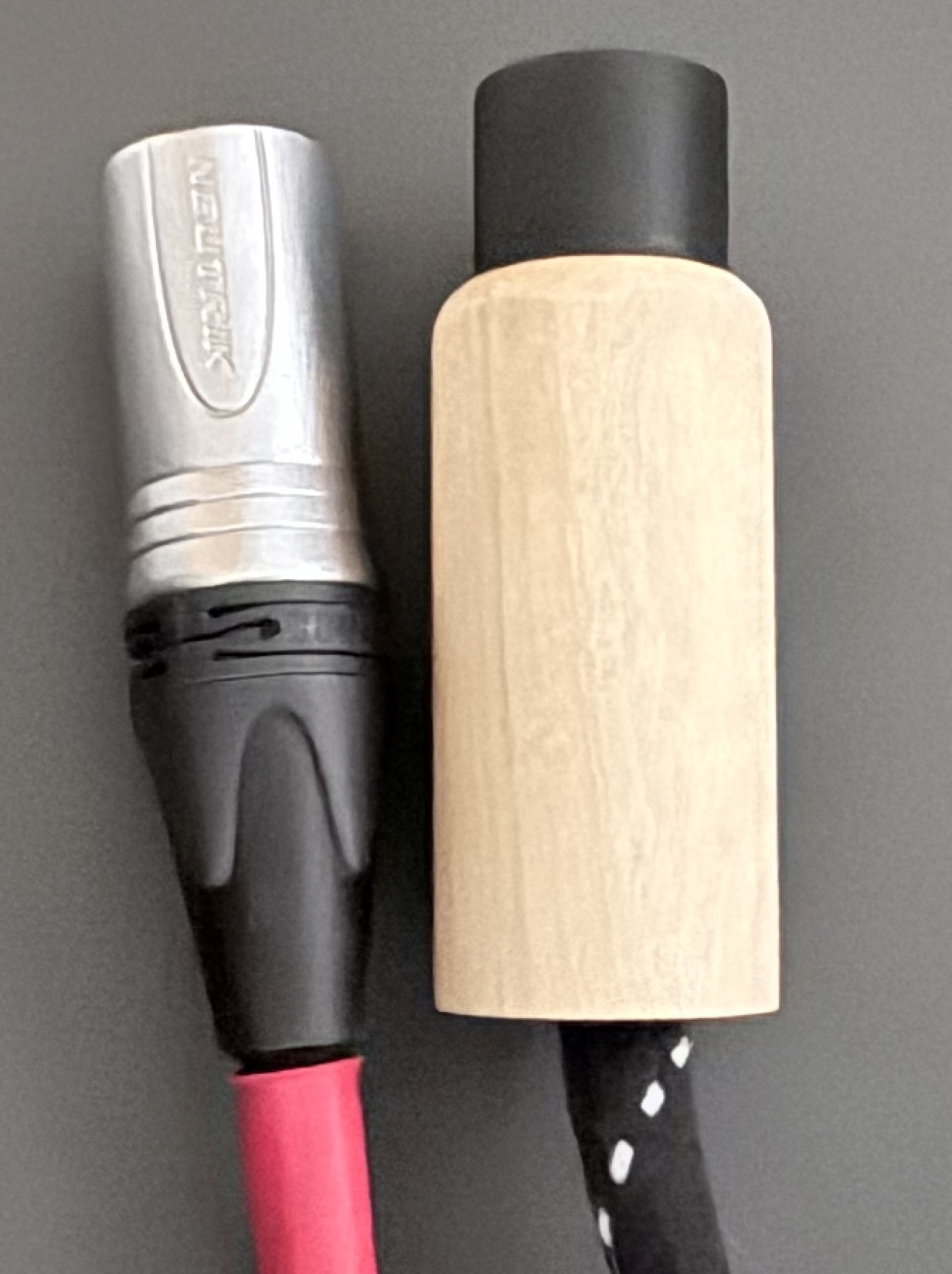
Without turning this into a XLR cable review, I preferred the Tellurium to the Entriq sound wise, and also its construction. The large wooden plugs on the Entriq (Much larger than Neutrik plugs) were a ball ache to detach from the Vitus amp using the ‘Push Tab Release’. Both these cables are priced around £400.
To my ears, the ‘Sommer Epilogue’ cables did not require any ‘Burn In’. Right from the off, they had more detail than the above cables. If they improve over time, then that’ll be a bonus! For £125 what’s not to like?
Hi Merlot, i can not coment about others experience, but mine with burn in cables is pretty obvious the benefits, especially with the Nordost cables i had, not as much with the synergetic research. The difference is so high that is hard for me to believe someone that loves sound can not feel the difference. When i change from the Tyr2 to the Valhalla 2, starting to listening to the Valhalla without the burning period, the sound was worse than the Tyr2, reason why i has to keep the Tyr2 and let the Valhalla to burn in on the machine.

 ).
).